The Turning Point
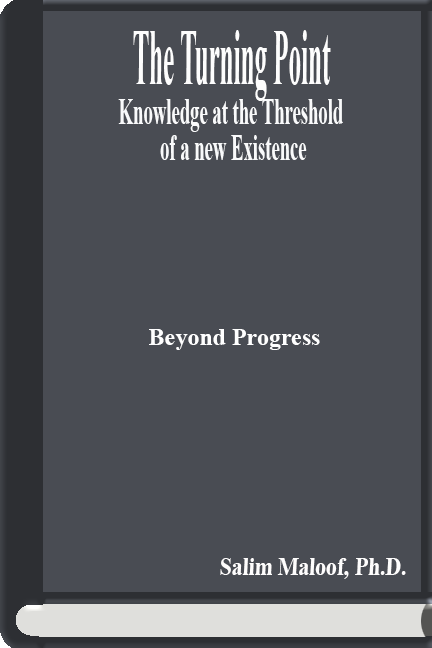
This book was written by Salim Maloof, posted on July 05, 2017
In 1945, the victors of WW2 (the old powers) dismantled their empires and invited the societies they had vanquished during the war, as well as those they were dominating, to work with them after freeing them to secure the common standards suggested in the UN Charter, the Universal Declaration of Human Rights (UDHR), and other international treaties. To accomplish this goal, they disengaged from the day-to-day operation of the international order and appointed the United States as the new global policeman of the world. They also created a new intergovernmental organization, which they named the United Nations, whom they tasked with coordinating the social, political, and economic reforms they would be proposing.
No one knows why the victors of WW2 decided to dismantle the empires they had built and preferred instead to maintain their superiority through the steps outlined in the UN Charter and the UDHR. This process involved transferring their power to the peoples of the societies they vanquished and the ones they freed, when they fully knew the passionate yearning of all people for freedom and power, which could be in conflict with their own power and wealth if it got out of control.
For one reason or another, the victors of WW2 decided to deny the societies they vanquished during WW2 and the ones they freed the time needed to let the common standards suggested in the UN Charter or the UDHR produce the WW2 implicit and explicit war aims they were counting on. The victors of WW2 initially, and now their heirs, are not transforming the conditions and outcomes that matter to them by observing and respecting the work program suggested in the UN Charter or the UDHR but are returning to maintaining their superiority through adopting the same barbarous methods they found their fathers and forefathers practicing before WW2 erupted.
Institutions and laws—such as governments, schools, and companies—are important because they create order and provide the parameters for everyday behavior for citizens. Without them, daily life would be unsafe and chaotic.
The decision by the victors of World War II and their heirs to deviate from the work program proposed in the UN Charter and the UDHR, after dismantling their empires and as globalization transformed the world into one interconnected community, has had a drastic impact on the maintenance of their wealth, status, and power. Globalization, or the concept of development, increased the wealth, power, and status of the heirs of the victors of WW2 but simultaneously augmented the number of people who started to rival them to play their global hegemonic role.
Institutions keep societies stable. When institutions become weak, people disperse similarly to how a canister containing compressed gas releases its mist into the air when pressed. It is not possible to recover the mist that is released because it immediately disperses.
The consequence of the victors of WW2 and later their heirs letting the societies they vanquished during WW2 and the societies they were dominating work with them to secure the ends suggested in the UN Charter or the UDHR while regarding themselves as exempt from observing the standards suggested has dispersed people away from them in an alarming manner. Presently, the heirs of WW2 are standing on top of the capitalist (money) system but not the production infrastructure and its resources or human capital.
The heirs of the victors of WW2 need to defend the international order and to preserve its constitutions and laws to keep their superiority. Alternatively, the heirs of the victors of WW2 could return to relying on colonialism, but this policy appears to be out of history for the time being. To date, the decision of the victors of WW2 and later their heirs to deviate away from the work program proposed in the UN Charter and the UDHR has transformed the international order from being a system in which people use to secure the ends proclaimed to a system in which different groups or components coordinate with each other to determine who could make the weakest consider the opinion of the fittest before taking action on his own.
This is not the first time in which people converted the world into allied groups that all regard themselves as equal and who cooperate without any regard to any order—constitution or laws.
Throughout history, all the societies that perceived that the purpose of governments or institutions is how to use such violence-wielding apparatus to direct it at others or to control others realized that they were not able to maintain their power, wealth, and status intact later. When such societies permitted that their leaders use their governments and institutions to come together to make deals and not contradict each other, they soon realized that such a strategy weakened their institutions and state, leaving them in a worse situation than they were and paying a big price as a result.
Biblical scriptures and philosophical books are full of stories about societies and kingdoms that decided to use their institutions to determine who could use such a violence-wielding apparatus to make the weakest consider the opinions of the fittest before taking action on their own.
In the Bible, in the book of Genesis, it is suggested that when wickedness increased in the world, and the Lord saw how great the wickedness of the human race had become on the earth, he regretted that he wiped from the face of the earth the human race for the exception of Noah and his family, whom they had found favor in his eyes. The Bible suggests that a new life cycle began after he wiped out the human race from the face of the earth, with the exception of Noah and his family.
The book The Turning Point examines how mankind could be living similar events and how such biblical events could repeat at the hands of the heirs of the victors of WW2 and their critical thinkers and servants (governments and international institutions) if they continue to transform the conditions and outcomes that matter to them without political clarity and with sectarianism controlling their minds instead of God.
The book The Turning Point aims to demonstrate how the heirs of the victors of WW2 could be hastening the decline of the current life cycle through their actions, potentially leading to a new life cycle whose history would be written by future generations, similar to what occurred after the flood. The book aims to illustrate how the political ignorance exhibited by the heirs of the victors of WW2, along with their critical thinkers and servants (governments and international institutions), since 1945, indicates a lack of vision for building a future world with improved relations between people, and how their irresponsible political hegemony is causing divisions among people and leading the world toward greater insecurity.
The purpose of the book is to draw the attention of the heirs of the victors of WW2 to the need to have their critical thinkers and servants (governments and international institutions) reduce wickedness and corruption in the world to prevent the destruction of their power, wealth, and status and the rise of new families who would start to play their role.
You can contact Salim Maloof to request more information at Info@centerMPA.com
Disclaimer: The contents of this article are of sole responsibility of the author(s). The Center for Modernity Planning and Assessment or Salim Maloof will not be responsible for any inaccurate or incorrect statement in this article. The Center for Modernity Planning and Assessment grants permission to cross-post original articles published by the Center on internet sites as long as the text & title are not modified. The source and the author’s copyright must be displayed.